


Course Content
Seven focused, hands-on modules
The day is structured into clear, focused learning modules:
01 Introduction to PAT Testing and Electrical Equipment
The course opens by establishing a firm grounding in what Portable Appliance Testing is, why it is carried out, and how it fits within a broader workplace electrical safety management system. Key industry terms are defined at the outset so that every concept introduced later in the day lands without confusion.
You will also be introduced to the full range of electrical equipment types you are likely to encounter — portable, movable, hand-held, stationary, fixed and IT equipment — together with the equipment classes (Class I, Class II and Class III) that govern how each appliance is protected against electric shock. Grasping these classifications from the start is critical, because the class and category of an item determines precisely which tests must be applied to it.
02 Electrical Safety, Electrical Dangers and Relevant Legislation
Understanding the hazards is the essential precursor to controlling them. This module explains the mechanisms by which electricity causes harm — electric shock, burns and fire — and identifies the conditions under which defective equipment becomes dangerous to users and bystanders.
The module then maps out the complete legal framework within which PAT testing operates. You'll study the Health and Safety at Work etc. Act 1974, the Electricity at Work Regulations 1989, the Provision and Use of Work Equipment Regulations 1998 (PUWER) and associated guidance. A key point is addressed directly: there is no regulation that specifically mandates PAT testing, yet duty holders are legally obliged to maintain electrical equipment in a safe condition — and systematic inspection and testing is the recognised means of discharging that obligation. You will know exactly who holds responsibility and what 'reasonably practicable' requires of them in day-to-day practice.
03 Visual Inspections and Equipment Construction
The formal visual inspection is consistently the most productive stage of the PAT process, catching the majority of faults before any electrical testing begins. This module teaches you how to carry out a thorough, structured inspection and how to identify the signs of damage, deterioration and misuse that mean an appliance must be withdrawn from service.
Coverage extends to the inside of the equipment: correct plug wiring to BS 1363, appropriate fuse selection, cable and flex condition, strain relief integrity, and the soundness of the casing and internal connections. You will learn how construction relates to equipment class and understand the clear distinction between routine user checks and the formal inspection conducted by a competent person.
04 Practical Instruction Using PAT Testing Equipment
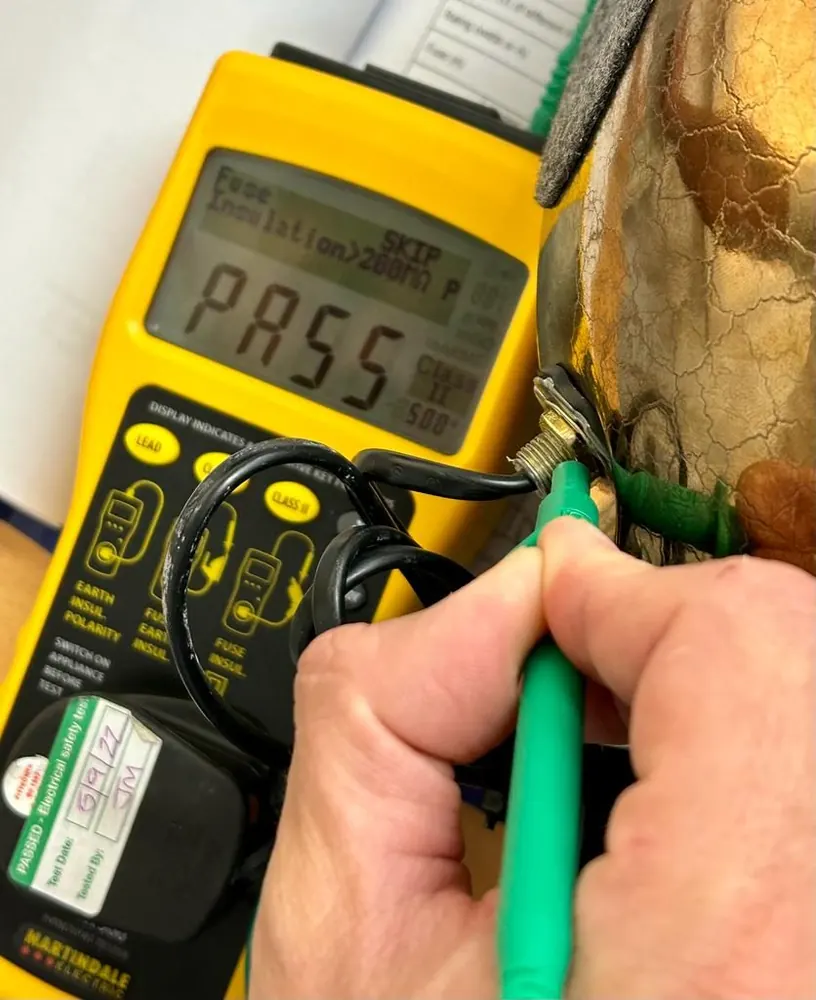
This is where the course moves fully into practical territory. Working with real PAT testing instruments in the hands-on learning area, you'll grow comfortable setting up and operating equipment safely and accurately. The module covers the range of testers in common use — from straightforward pass/fail units through to advanced downloadable instruments that store and export results electronically.
Through repeated practice you'll learn correct appliance connection, appreciate the importance of calibrated test equipment, and build the confidence and muscle memory that come only from doing. By the module's end, operating a PAT tester will feel entirely natural.
05 Inspection and Testing Procedures
This module establishes the formal test sequence and demonstrates how it is applied across different appliance types. You'll work through each of the core electrical tests in turn — earth continuity testing, insulation resistance testing, lead and polarity checks, and functional checks — understanding the purpose and the proof each one provides.
You'll also learn how the correct test sequence differs for Class I compared with Class II equipment, ensuring you consistently apply the right tests in the right order. Safe working practice is woven throughout, so every test you perform is both technically sound and physically safe.
06 Interpreting Test Results and Record Keeping
A result is only meaningful once you can interpret it accurately. This module teaches you to read instrument outputs against recognised acceptable limits, make a clear pass or fail determination, and take appropriate action when an appliance fails. Correct labelling and the maintenance of clear, defensible test records are covered in full.
You'll also learn how to set appropriate retest intervals using the risk-based approach embedded in the current edition of the IET Code of Practice — a methodology that replaced rigid fixed-frequency tables and asks you to consider equipment type, working environment, frequency of use and the nature of the users. Robust record keeping and a well-maintained asset register are presented as the practical foundation of ongoing compliance and due diligence.
07 Legal Requirements, Non-Statutory Requirements and the IET Code
The final module draws the threads of the day together and anchors your new skills firmly within their regulatory context. You'll examine the distinction between statutory requirements — the legislation you must comply with — and non-statutory guidance, which sets out recognised best practice for meeting those requirements; both are equally important to a confident, competent PAT tester.
Central to the module is the IET Code of Practice for In-Service Inspection and Testing of Electrical Equipment, 5th Edition. You'll learn what the Code says, how it supports the relevant legislation, and how to apply it as your primary day-to-day reference. The course closes with a clear picture of what competence means in this field, how to evidence due diligence, and how to conduct PAT testing to a professional and legally defensible standard.
A substantial portion of the day is spent in the hands-on learning area so every delegate gets meaningful practice with real testing instruments.